
Norovirus is the most common cause of acute gastroenteritis outbreaks in long-term care facilities across Canada, and Ontario is no exception. It spreads faster, contaminates more surfaces, and resists more disinfectants than most healthcare administrators realize until they are managing their first outbreak. A single symptomatic resident can shed billions of viral particles per gram of stool, and contaminated surfaces can transmit infection for days if standard cleaning products are used instead of the correct sporicidal alternatives.
This guide gives Ontario long-term care teams a step-by-step outbreak management framework built specifically for norovirus, aligned with current PHO guidance and Ministry of Long-Term Care expectations.
Understanding Why Norovirus Is So Difficult to Control

Norovirus belongs to the Caliciviridae family and is non-enveloped, which means the lipid envelope that most disinfectants target is absent.
Alcohol-based hand rub is significantly less effective against norovirus than against enveloped viruses like influenza. The infectious dose is estimated at fewer than 20 viral particles, meaning environmental contamination that appears minimal is more than sufficient to cause infection in a susceptible individual.
Public Health Ontario highlighted in its enteric illness guidance that norovirus is the dominant pathogen in institutional gastrointestinal outbreaks in Ontario, with long-term care facilities bearing a disproportionate share of outbreak burden.
The outbreak prevention in high-risk long-term care settings resource from Infection Shield provides specific context on why congregate living environments amplify norovirus transmission risk beyond what is seen in acute care settings.
Containing norovirus requires understanding its biology before executing your management steps.
Step 1: Recognizing the Outbreak and Declaring a Case Definition
Identifying the Trigger: When Symptoms Become an Outbreak
An acute gastroenteritis outbreak in a long-term care facility is typically defined as two or more residents or staff experiencing similar symptoms within 48 hours. Norovirus-specific criteria include vomiting or diarrhea, or both, of sudden onset without an alternative explanation such as a medication change or a pre-existing gastrointestinal condition.
Your team must have a written case definition in your outbreak management plan before an outbreak occurs. Using a consistent definition ensures that all staff are identifying and reporting cases using the same criteria, which is critical for accurate line listing and epidemiological tracking.
Distinguishing Norovirus from Other Gastrointestinal Illness
Norovirus outbreaks typically present with sudden-onset vomiting, watery diarrhea, nausea, and low-grade fever. The incubation period is 12 to 48 hours. Most cases resolve within one to three days in otherwise healthy individuals, though elderly residents with underlying conditions may experience more prolonged or complicated illness.
Distinguishing norovirus from other gastrointestinal pathogens matters for disinfectant selection and isolation decisions. Stool specimens from index cases should be collected and submitted to the laboratory for confirmation, particularly for outbreaks that are large, prolonged, or refractory to standard management.
Early recognition shapes the speed and effectiveness of your entire response.
Step 2: Activating Your Outbreak Management Team
Who Belongs on the Team
Your outbreak management team should include the Director of Care or delegate, the IPAC lead, the Director of Environmental Services, the Food Services Manager, the Occupational Health lead, and frontline charge nurses from affected units.
This team must be able to convene within hours of an outbreak declaration, not days. Pre-designated roles, a communication tree, and a standing meeting protocol reduce the response lag that allows norovirus to spread to additional units before coordinated action is taken.
First Team Actions in the First Six Hours
The first six hours of an outbreak response are the most critical for limiting spread. Your team must confirm the case definition, identify the affected units and cohort symptomatic residents, activate enhanced cleaning protocols in affected areas, notify your Director of Public Health reporting obligation, and brief all frontline staff on the outbreak status and their specific responsibilities.
The outbreak management 101 steps framework from Infection Shield provides a role-specific action checklist for the first 24 hours that your team can adapt directly for norovirus response.
A fast-moving team limits the window for additional transmission. Your reporting obligation to public health runs in parallel.
Step 3: Reporting to Public Health Ontario
When and How to Report
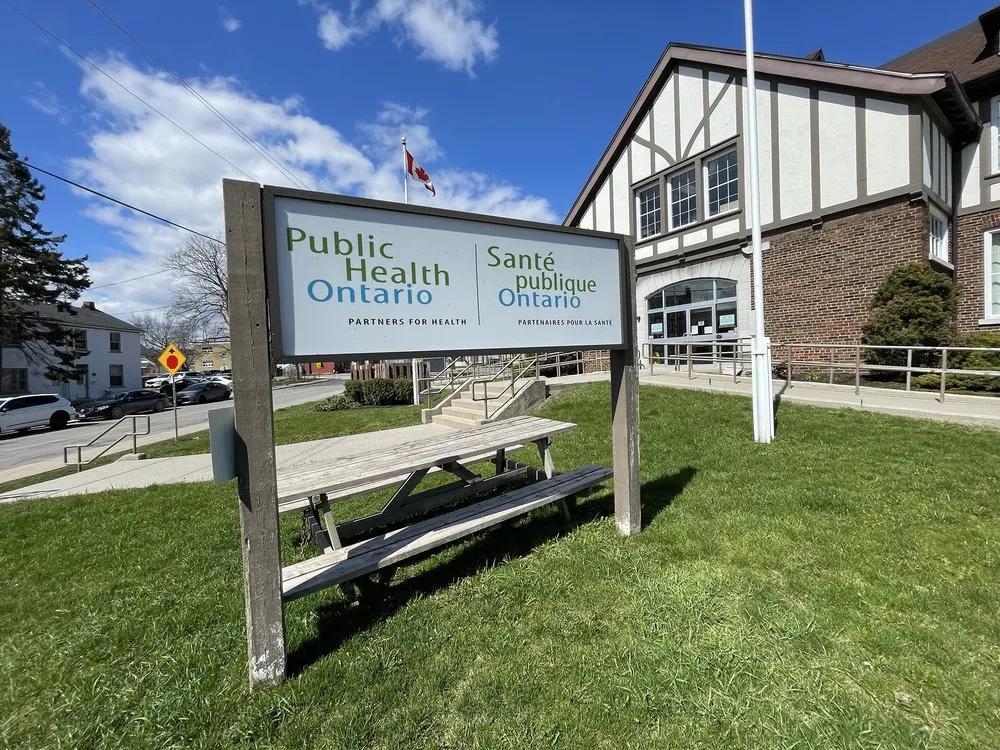
Ontario long-term care facilities are required to report declared outbreaks of acute gastroenteritis to their local public health unit within 24 hours of outbreak declaration.
Reporting is made by the Director of Care or IPAC lead to the local Medical Officer of Health’s office. The initial report must include the number of cases, the affected units, the case definition being used, and the management actions already initiated.
Working Collaboratively with Your Public Health Unit
Your local public health unit may assign a public health inspector or nurse to work with your facility during the outbreak. This relationship is collaborative, not adversarial. Their role is to support your outbreak management and to investigate the epidemiological source if it is not immediately apparent.
Providing your public health contact with timely, accurate information through the outbreak accelerates their support and demonstrates the organizational transparency that regulators value in post-outbreak reviews.
Reporting triggers the external support structure. Internal precautions activation is happening simultaneously.
Step 4: Implementing Enhanced Contact Precautions
The Norovirus-Specific Contact Precaution Bundle
Standard contact precautions for norovirus require gown and glove use for all resident care and cleaning activities in affected areas. Because norovirus is transmitted primarily via the fecal-oral route and through aerosolized vomitus, additional droplet protection including a surgical mask is recommended when caring for actively vomiting residents.
ABHR must be supplemented or replaced by soap and water handwashing for staff managing norovirus cases, as alcohol has limited effectiveness against non-enveloped viruses. This is one of the most common errors in norovirus outbreak response across Ontario long-term care settings.
Cohorting Symptomatic Residents
Symptomatic residents must be confined to their rooms during the active phase of their illness. Group dining, recreational activities, and communal spaces must be suspended for the affected cohort until cases resolve and enhanced cleaning of those spaces is complete.
Staff assignments must be adjusted to minimize movement between symptomatic and asymptomatic resident cohorts. Dedicated staff for the symptomatic cohort is the highest standard, though staffing constraints may require creative scheduling to approximate this where full dedication is not possible.
Precaution implementation must be matched with rigorous environmental management.
Step 5: Environmental Cleaning with Sporicidal Products
Why Standard Quaternary Ammonium Compounds Are Not Enough
Standard quaternary ammonium compound disinfectants, which are commonly used for routine cleaning in long-term care, do not reliably inactivate norovirus. Chlorine-based disinfectants at a concentration of at least 1000 ppm available chlorine are the recommended sporicidal agents for norovirus decontamination in Ontario.
The cleaning versus disinfecting versus sterilizing resource explains the mechanism differences between these product categories and why product selection is not interchangeable depending on the pathogen being targeted.
Your environmental services team must be trained to switch to the correct chlorine-based products at the correct concentration as soon as a norovirus outbreak is declared.
Cleaning Frequency and Priority Surfaces
During an active norovirus outbreak, high-touch surfaces in affected areas must be cleaned and disinfected at least twice daily using chlorine-based products at the correct concentration, with additional cleaning after any vomiting or diarrhea episode.
Priority surfaces include toilet handles, call bells, door handles, bedrails, light switches, remote controls, and dining furniture. Environmental vomit contamination must be managed using a chlorine-based solution and appropriate PPE immediately upon occurrence, with the area kept clear of other residents until cleaning is complete.
Aggressive environmental management reduces the viral burden in shared spaces and accelerates outbreak resolution.
Step 6: Managing Symptomatic Residents and Staff
Resident Care During Active Illness
Symptomatic residents require close monitoring for dehydration, which is a serious complication in elderly individuals with limited physiological reserve. Oral rehydration, intravenous fluids where clinically indicated, and regular vital sign monitoring are standard components of symptomatic care during a norovirus outbreak.
Antidiarrheal agents are not routinely recommended for norovirus, as they can prolong viral shedding. Resident care plans should be reviewed for any medications that increase gastrointestinal risk during the acute illness phase.
Staff Exclusion Policies During Norovirus Outbreaks
Symptomatic staff must be excluded from the workplace until at least 48 hours after their last episode of vomiting or diarrhea. This 48-hour rule is non-negotiable during norovirus outbreaks, as viral shedding continues beyond symptom resolution.
Allowing symptomatic staff to return prematurely is one of the most common drivers of outbreak prolongation in long-term care settings. Your exclusion policy must be enforced consistently regardless of staffing pressures during the outbreak period.
The IPAC personal risk assessment for long-term care resource provides a framework for staff risk assessment decisions during outbreak events.
Staff exclusion management feeds directly into your visitor access and communication protocols.
Step 7: Controlling Visitor Access and Communications
Temporary Visitor Restrictions During Active Outbreaks
During a declared norovirus outbreak, your facility should consider implementing temporary visitor restrictions for the affected unit or wing, particularly for visitors who are elderly, immunocompromised, pregnant, or have young children in their household.
Visitors who are permitted to enter must be informed of the outbreak, required to perform hand hygiene with soap and water upon entry, and advised against visiting if they have experienced any gastrointestinal symptoms in the past 48 hours.
Communicating with Families and the Public
Family notification is both a regulatory requirement and an ethical obligation. Your communication must be factual, timely, and consistent across all staff who may field family inquiries.
A written family notification letter issued within 24 hours of outbreak declaration, followed by regular updates at defined intervals, demonstrates organizational transparency and reduces the information anxiety that families experience during outbreak events.
PHO’s outbreak communication guidance outlines the expected elements of public health communication during institutional outbreaks that can inform your family letter template.
Communication with families runs parallel to the internal monitoring that tracks outbreak progression.
Step 8: Monitoring, Line Listing, and Epidemiological Tracking
Maintaining the Outbreak Line List
A line list is a structured record of all outbreak cases including case identifier, unit, symptom onset date and time, symptoms, severity, and outcome. The line list is a dynamic document updated daily throughout the outbreak.
Your public health unit will request the line list as a standard element of outbreak investigation. A complete, accurate line list enables epidemiological analysis that can identify the probable source, the transmission pathway, and the population at greatest risk for ongoing spread.
Using the Epi Curve to Understand Outbreak Progression
An epidemic curve plots new cases by onset date and reveals whether the outbreak is a point-source event, a propagated outbreak spreading person to person, or a mixed pattern. Understanding the curve shape guides decisions about when enhanced measures should be intensified, maintained, or relaxed.
A flattening curve with no new cases over 72 hours indicates the outbreak is likely resolving. A new case cluster appearing after a period of no cases suggests reintroduction and may require re-escalation of controls.
Epidemiological tracking supports the eventual decision to declare the outbreak over.
Step 9: Declaring the Outbreak Over and Post-Outbreak Review
Ontario Criteria for Outbreak Termination
An outbreak in a long-term care facility is generally considered resolved when no new cases have been identified for at least 72 hours after the last case’s symptom resolution, enhanced cleaning of all affected areas has been completed with chlorine-based products, and your local public health unit has been notified and concurs with the outbreak termination decision.
The formal outbreak declaration must be documented in your outbreak management records along with the date, the basis for the declaration, and the public health unit’s concurrence.
Post-Outbreak Review as a Quality Improvement Tool
Every norovirus outbreak should be followed by a structured post-outbreak review within two to four weeks of termination. This review should examine the timeline of the outbreak, whether response actions were initiated promptly, whether staff exclusion policies were followed, the effectiveness of environmental cleaning, and any identified gaps in the facility’s outbreak management plan.
The findings of the post-outbreak review must be documented and used to update your IPAC program. Facilities that treat outbreak reviews as a compliance exercise rather than a genuine quality improvement opportunity consistently see recurrent outbreaks driven by the same unaddressed system weaknesses.
Infection Shield’s IPAC consulting for long-term care can support post-outbreak review, corrective action planning, and IPAC program updates in the aftermath of a norovirus event.
Norovirus will come back. The question is whether your systems are stronger than they were last time.
FAQ
Why is alcohol-based hand rub less effective against norovirus?
Norovirus is a non-enveloped virus, and alcohol-based hand rubs primarily target the lipid envelope found on enveloped viruses. WHO and PHO both recommend soap and water as the preferred hand hygiene method during norovirus outbreaks, with ABHR used only where soap and water are not immediately available.
What disinfectant concentration is required to inactivate norovirus on surfaces?
Chlorine-based disinfectants at a minimum concentration of 1000 ppm available chlorine are recommended for norovirus surface decontamination. This is significantly higher than routine cleaning concentrations and requires staff to prepare fresh solutions daily as chlorine degrades over time.
When can a staff member return to work after a norovirus illness?
Staff must remain off work for at least 48 hours after their last episode of vomiting or diarrhea. This 48-hour rule reflects the continued viral shedding period after symptoms resolve and is a non-negotiable standard during declared outbreaks.
How quickly must Ontario LTC facilities report a gastroenteritis outbreak?
Ontario long-term care facilities must report a declared outbreak to their local public health unit within 24 hours of declaration. Initial reporting is followed by regular updates throughout the outbreak and formal notification when the outbreak is declared over.
What is the minimum period without new cases before an Ontario LTC facility can declare a norovirus outbreak over?
The generally accepted threshold is 72 hours without any new cases after the last case’s symptom resolution, combined with completion of terminal cleaning in all affected areas and public health unit concurrence with the termination decision.
Norovirus outbreaks in long-term care move faster than most facilities are prepared to respond to. If your outbreak management plan has not been tested or updated recently, the next outbreak will find your gaps. Contact Infection Shield for a comprehensive outbreak management plan review and staff training program tailored to Ontario long-term care requirements.