General IPAC

What to Expect During a PHO

What to Expect During a PHO (Public Health Ontario) Audit in 2026

A Public Health Ontario audit or public health inspection is one of the most significant regulatory events a healthcare facility or community practice can face. The combination of advance uncertainty, documentation scrutiny, and potential for enforceable findings makes many IPAC leads and facility managers anxious about the process, even when their programs are strong. The […]

What to Expect During a PHO (Public Health Ontario) Audit in 2026 Read More »

Foot Care Clinic IPAC

Why Foot Care Clinics Face Distinct IPAC Obligations

Foot care clinics occupy a unique space in the Ontario healthcare landscape. They are often small, privately operated, and outside the immediate regulatory sphere of hospital-based IPAC programs, yet they perform procedures that carry real infection transmission risk. Instruments that contact intact and broken skin, wound management in patients with diabetes and vascular disease, and

Why Foot Care Clinics Face Distinct IPAC Obligations Read More »

Respiratory Protection Programs

Respiratory Protection Programs: Fit Testing Requirements in Ontario 2026

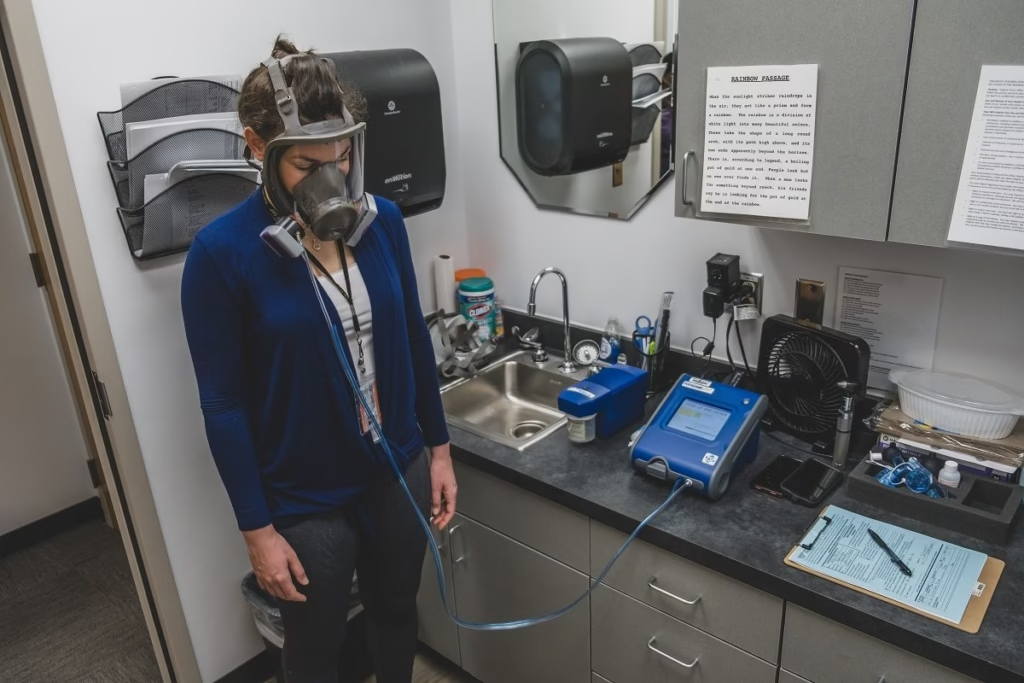
Respiratory protection is not just a piece of equipment. It is a system, and a system that fails at any point puts the people wearing the equipment at serious risk of exposure to airborne pathogens. Ontario healthcare workers learned this lesson with brutal clarity during the COVID-19 pandemic, and the province’s regulatory expectations around respiratory

Respiratory Protection Programs: Fit Testing Requirements in Ontario 2026 Read More »

Managing MDROs

Managing MDROs (MRSA/VRE) in Congregate Living Settings: Ontario 2026

Multi-drug resistant organisms have reshaped infection prevention in congregate living settings in ways that standard cleaning protocols were never designed to address. MRSA and VRE are not simply difficult-to-treat pathogens. They are environmental survivors that colonize residents, persist on surfaces, and spread silently through shared spaces and staff hands. Managing MDROs in long-term care homes,

Managing MDROs (MRSA/VRE) in Congregate Living Settings: Ontario 2026 Read More »

MDRD Best Practices: Ensuring Safe Medical Device Reprocessing

Daycare IPAC Checklist: Meeting Public Health Ontario Guidelines in 2026

Infection prevention in childcare settings carries consequences that extend far beyond regulatory compliance. Children under five have developing immune systems, making daycares one of the highest-risk environments for rapid pathogen transmission. Public Health Ontario has established clear IPAC guidelines that licensed childcare operators must follow, yet many facilities still have critical gaps in their day-to-day

Daycare IPAC Checklist: Meeting Public Health Ontario Guidelines in 2026 Read More »

The 4 Moments of Hand Hygiene

The 4 Moments of Hand Hygiene: Why Hospitals Still Struggle

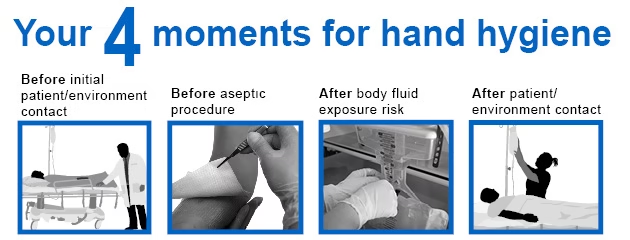
Hand hygiene is universally recognized as the single most effective measure for preventing healthcare-associated infections, and yet hospitals across Canada and around the world continue to fall short of consistent compliance at the point of care. The four moments of hand hygiene framework, developed and promoted by the World Health Organization, gives healthcare workers a

The 4 Moments of Hand Hygiene: Why Hospitals Still Struggle Read More »

How IPAC Consulting Saved

How IPAC Consulting Saved a Clinic from Ministry Non-Compliance: A Practical Case Study Guide

Ministry non-compliance is not an abstract regulatory concept for the facilities it touches. It means corrective action orders, public posting of deficiencies, mandatory follow-up inspections, and in the most serious cases, the very real possibility of forced closure or suspension of services. For the patients, residents, and clients who depend on those facilities, it means

How IPAC Consulting Saved a Clinic from Ministry Non-Compliance: A Practical Case Study Guide Read More »

Avian Flu & Emerging Pathogens

Avian Flu and Emerging Pathogens: Your 2026 IPAC Preparedness Strategy

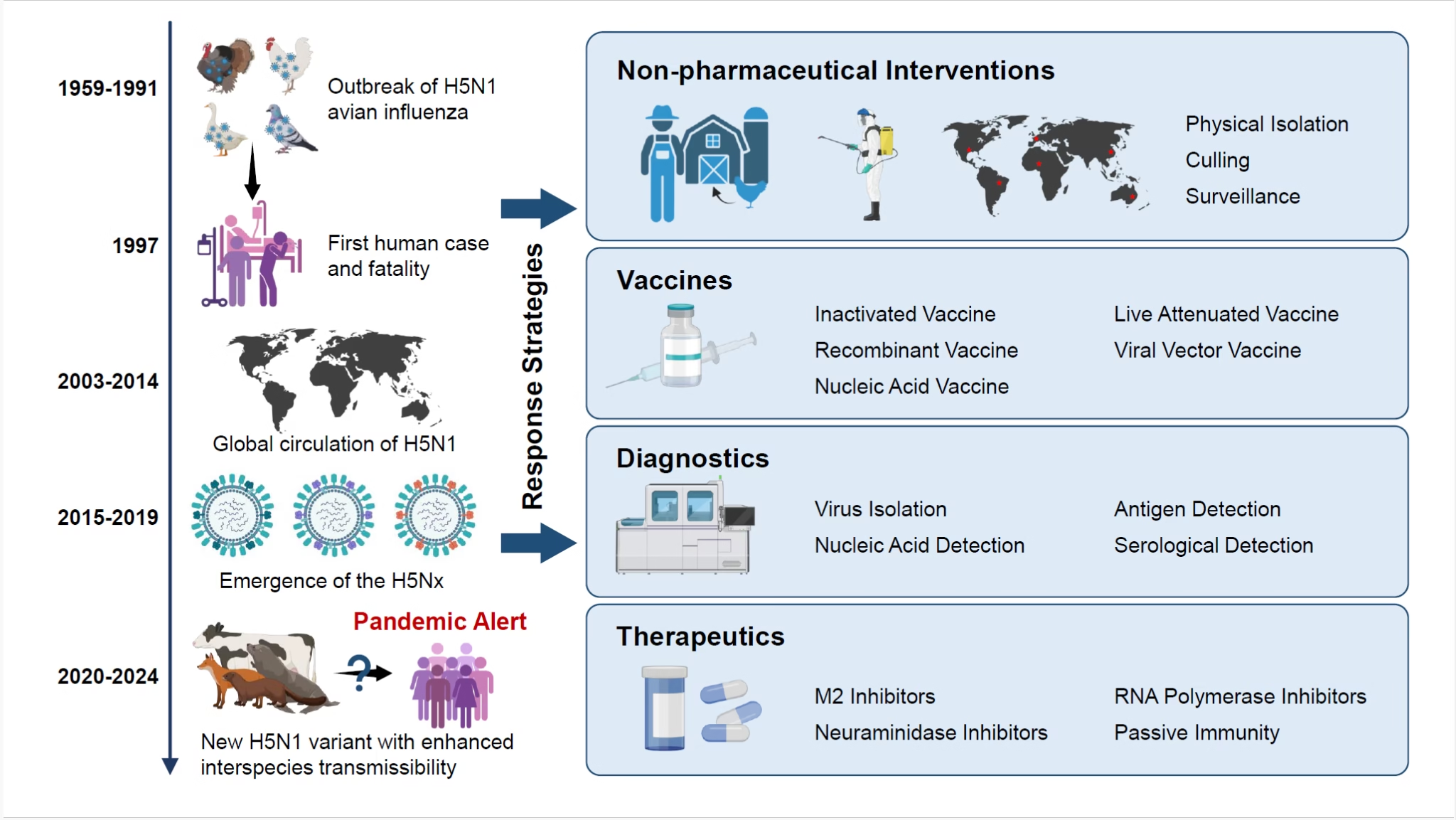
The question for Canadian healthcare facilities in 2026 is no longer whether another significant pathogen will emerge. It is whether your facility’s infection prevention systems will hold when it does. Avian influenza A(H5N1) has been spreading among animal populations across North America and has produced a growing number of human cases globally, raising the level

Avian Flu and Emerging Pathogens: Your 2026 IPAC Preparedness Strategy Read More »

Foot Care Clinic IPAC: Specialized Protocols for Podiatrists

Foot Care Clinic IPAC: Specialized Infection Control Protocols for Podiatrists

Foot care clinics operate in a space where infection risk is constant but often underestimated. Every procedure that breaks skin, contacts mucous membrane, or involves wound care carries a transmission risk that must be managed with the same rigour applied in any clinical healthcare setting. Podiatrists and foot care nurses working in Ontario are subject

Foot Care Clinic IPAC: Specialized Infection Control Protocols for Podiatrists Read More »

What to Expect During a PIDAC Audit A Complete Facility Preparation Guide

What to Expect During a PIDAC Audit: A Complete Facility Preparation Guide

Every healthcare facility operating in Ontario will, at some point, face external scrutiny of its infection prevention and control practices. A PIDAC audit, conducted in alignment with standards established by the Provincial Infectious Diseases Advisory Committee, is one of the most thorough evaluations a facility can undergo. It is not designed to catch you off

What to Expect During a PIDAC Audit: A Complete Facility Preparation Guide Read More »

Scroll to Top